
Brain Tumor: Symptoms, Causes, Diagnosis & Treatment
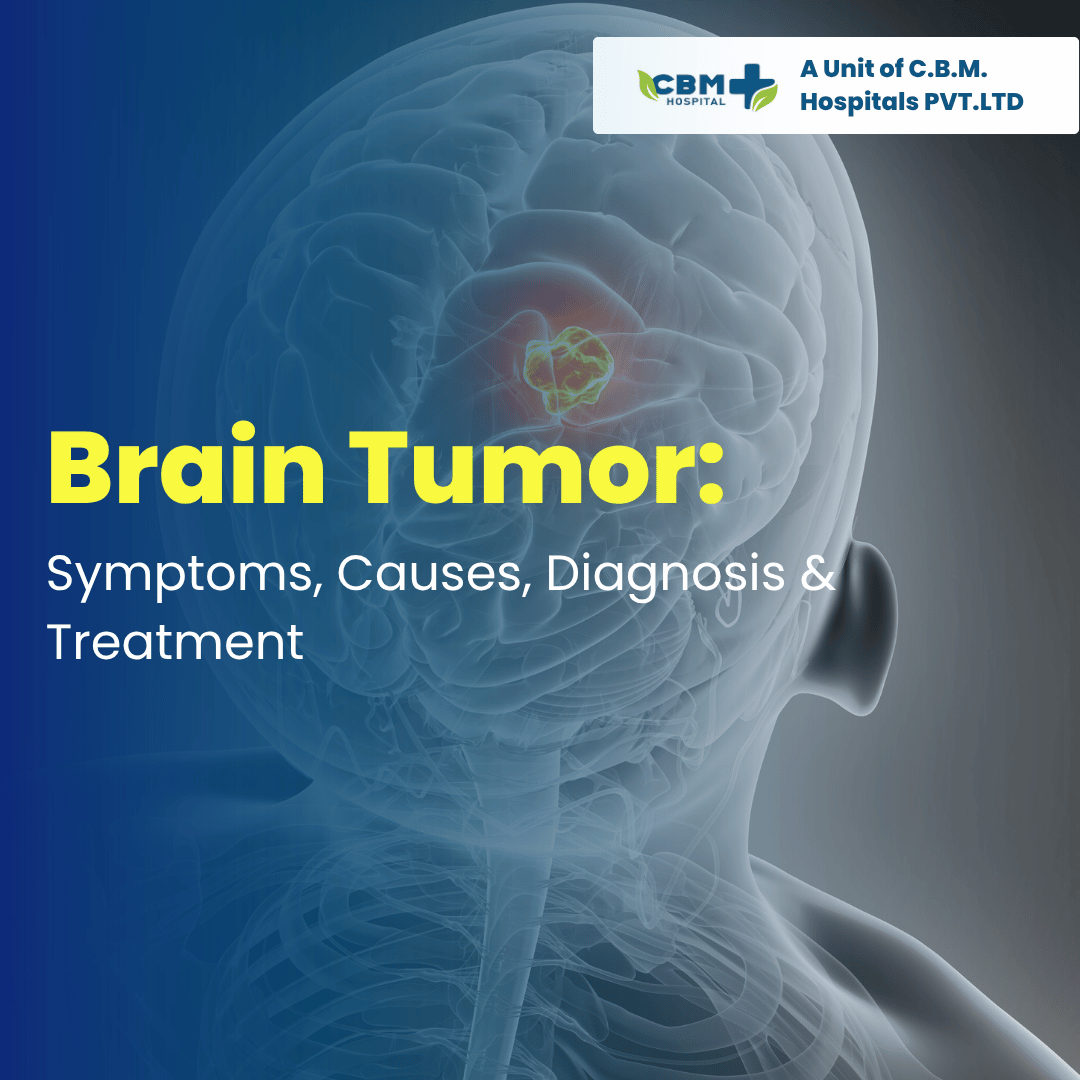
A brain tumor is an abnormal growth of cells in or around the brain. Brain tumors can be benign (non-cancerous) or malignant (cancerous). They can develop in different parts of the brain and may affect important functions such as movement, speech, memory, vision, balance, and coordination. Some brain tumors grow slowly, while others may grow more quickly. Symptoms depend on the tumor’s size, location, and type. Early medical evaluation is important when persistent or unusual neurological symptoms develop. This blog explains the symptoms, causes, types, diagnosis, treatment options, and recovery associated with brain tumors. What Is a Brain Tumor? A brain tumor develops when cells grow abnormally and form a mass within the brain or nearby structures. Brain tumors are broadly classified into: Benign Brain Tumors Benign tumors are generally non-cancerous and may grow slowly. However, they can still cause serious problems if they press on important areas of the brain or increase pressure inside the skull. Malignant Brain Tumors Malignant tumors are cancerous and may grow more aggressively. Some can invade nearby brain tissue or spread within the central nervous system. Brain tumors can also be classified as primary or secondary (metastatic). Primary brain tumors begin in the brain or nearby tissues. Secondary brain tumors occur when cancer from another part of the body spreads to the brain. In many cases, the exact cause of a brain tumor is not known. Possible risk factors or associations may include: Certain genetic conditions Previous exposure to high-dose radiation to the head Family history of certain brain tumors Changes or mutations in specific genes A history of cancer elsewhere in the body, which can spread to the brain It is important to understand that having a risk factor does not necessarily mean that a person will develop a brain tumor. Types of Brain Tumors There are many types of brain tumors. Some commonly known types include: Gliomas Glioblastoma Meningioma Pituitary tumors Schwannomas Medulloblastomas Metastatic brain tumors The treatment depends greatly on the type, grade, location, and size of the tumor. Symptoms of a Brain Tumor Brain tumor symptoms vary from person to person. Some symptoms develop gradually, while others may appear more quickly. Common symptoms may include: Persistent or worsening headaches Nausea or vomiting Seizures Blurred or double vision Difficulty speaking Weakness or numbness Problems with balance or coordination Memory problems Changes in personality or behaviour Difficulty concentrating Excessive sleepiness Changes in hearing Difficulty walking Having one of these symptoms does not automatically mean that a person has a brain tumor. Many other medical conditions can cause similar symptoms. Headache and Brain Tumors Headaches are common and usually have many possible causes. A headache associated with a brain tumor may sometimes: Become progressively worse Be different from previous headaches Be accompanied by vomiting Occur along with neurological symptoms Be worse in the morning in some patients However, headache alone is usually not enough to diagnose a brain tumor. Seizures A seizure can sometimes be the first noticeable symptom of a brain tumor. A person may experience: Uncontrolled movements Temporary loss of awareness Staring episodes Abnormal sensations Confusion after the episode A first-time seizure requires medical evaluation. Warning Signs That Need Medical Attention Seek prompt medical attention if a person develops: A new or rapidly worsening headache A first-time seizure Sudden weakness or numbness New difficulty speaking Significant vision changes Increasing confusion Repeated unexplained vomiting Progressive problems with balance or walking Significant changes in behaviour or personality Sudden symptoms such as facial drooping, arm weakness, speech difficulty, or loss of consciousness can also indicate other medical emergencies, such as stroke, and require immediate emergency care. How Is a Brain Tumor Diagnosed? Doctors use several tests to determine whether a brain tumor is present and to understand its characteristics. Neurological Examination A doctor may evaluate: Muscle strength Reflexes Vision Eye movements Balance Coordination Memory Speech Sensation The examination helps identify which parts of the nervous system may be affected. MRI Scan An MRI of the brain is one of the most important imaging tests for evaluating suspected brain tumors. It can provide detailed information about: Tumor location Tumor size Surrounding brain tissue Possible swelling Relationship to important brain structures Contrast material may be used in some MRI examinations. CT Scan A CT scan can provide rapid images of the brain and may be particularly useful in emergency situations or when MRI is not suitable. Biopsy In some cases, a biopsy may be required to determine the exact type and grade of a tumor. A small sample of tissue is examined by a pathologist. The results can help doctors decide which treatment is most appropriate. Not every brain tumor requires a biopsy; the decision depends on the location and characteristics of the tumor. Brain Tumor Treatment Treatment depends on several factors, including: Type of tumor Grade Size Location Growth rate Symptoms Patient’s age and general health Whether the tumor has spread Treatment may involve one or more approaches. 1. Observation and Regular Monitoring Some slow-growing tumors that are not causing significant symptoms may be monitored with regular MRI scans and medical follow-up. This approach is sometimes called active surveillance or watchful waiting. 2. Brain Tumor Surgery Surgery may be recommended when the tumor can be safely removed or when tissue is needed for diagnosis. The main goals may include: Removing as much of the tumor as safely possible Reducing pressure on the brain Relieving symptoms Obtaining tissue for diagnosis The exact surgical approach depends on the tumor’s location and characteristics. Craniotomy A craniotomy involves temporarily removing a section of the skull to provide access to the brain. The surgeon removes or treats the tumor through this opening and then replaces the bone section. Minimally Invasive or Image-Guided Approaches For selected tumors, surgeons may use specialised techniques, navigation systems, or minimally invasive approaches to access the tumor while aiming to protect healthy brain tissue. Not every tumor is suitable for the same surgical technique. 3. Radiation Therapy Radiation therapy uses high-energy radiation to damage … Read more