
Thyroid Surgery: When Is It Needed, What Happens During Surgery and What Is Recovery Like?-
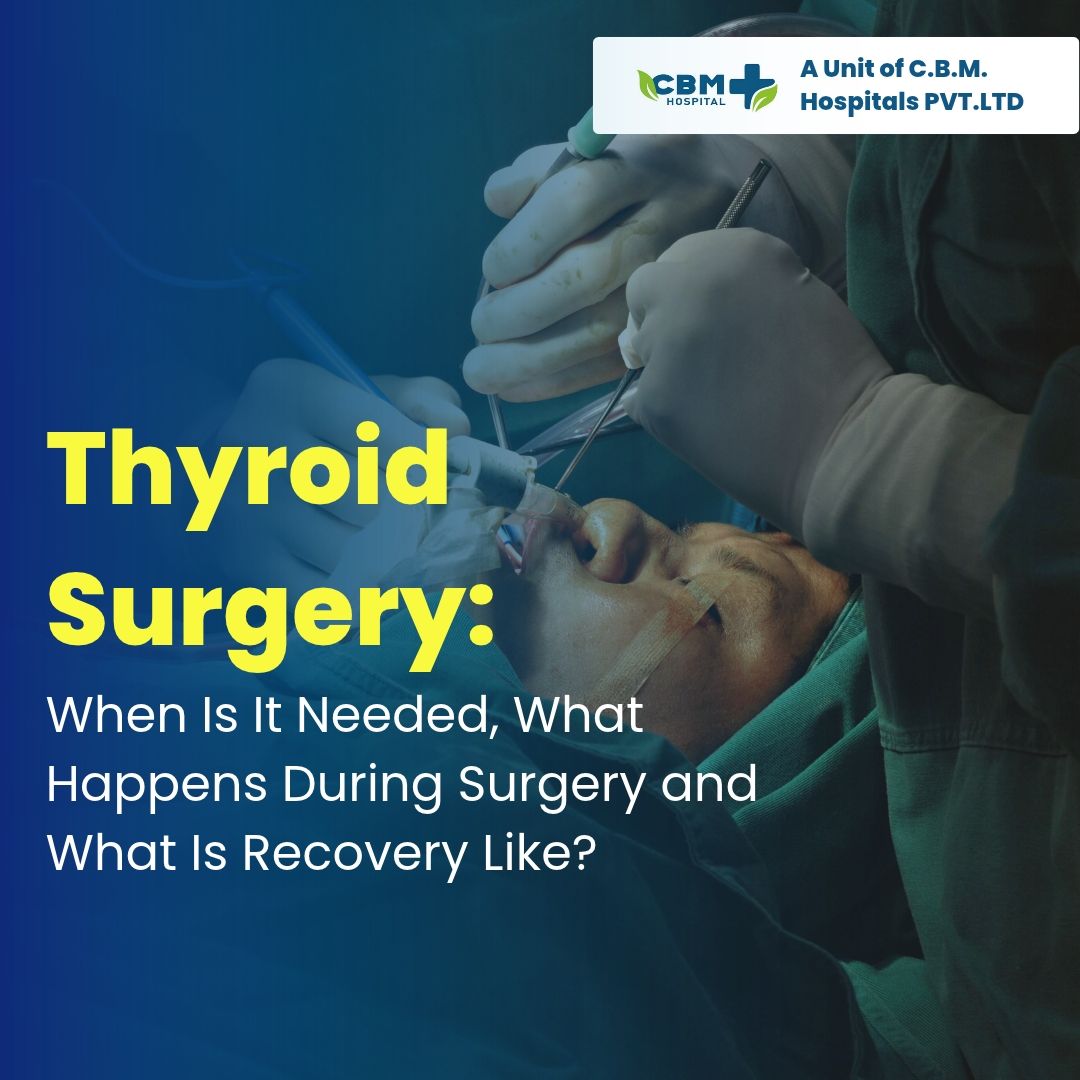
The thyroid is a small, butterfly-shaped gland located at the front of the neck, just below the voice box. It produces hormones that help regulate metabolism, body temperature, heart rate, energy levels, and several other important functions. When the thyroid develops nodules, becomes enlarged, or is affected by certain types of cancer, surgery may be recommended. Thyroid surgery, also known as thyroidectomy, involves removing part or all of the thyroid gland. The procedure is commonly performed to treat selected thyroid cancers, large goitres, suspicious nodules, and some cases of an overactive thyroid. Although the idea of neck surgery can feel worrying, understanding why surgery may be needed, how the procedure is performed, and what recovery involves can help patients prepare with greater confidence. What Is Thyroid Surgery? Thyroid surgery is an operation to remove a portion of the thyroid gland or the entire gland, depending on the underlying medical condition. The thyroid is located near important structures, including the vocal cord nerves and the parathyroid glands, which help regulate calcium levels in the body. For this reason, thyroid surgery requires careful assessment and an appropriately trained surgical team. The main types of thyroid surgery include: Thyroid lobectomy: Removal of one side, or lobe, of the thyroid. Total thyroidectomy: Removal of the entire thyroid gland. Subtotal thyroidectomy: Removal of most, but not all, of the thyroid tissue in selected situations. Completion thyroidectomy: Removal of the remaining thyroid tissue after an earlier operation, when medically indicated. The choice of procedure depends on the diagnosis, size and location of the thyroid abnormality, cancer risk, thyroid function, and the patient’s overall health. Not every thyroid problem requires surgery. Some conditions can be managed with medication, monitoring, radioactive iodine treatment, or other appropriate approaches. When Is Thyroid Surgery Needed? A doctor may recommend thyroid surgery when the potential benefits outweigh the risks of continuing with non-surgical treatment. 1. Thyroid Cancer Thyroid surgery is an important treatment for many thyroid cancers. Depending on the type, size, and extent of the cancer, the surgeon may recommend removing one thyroid lobe or the entire gland. In selected cases, lymph nodes in the neck may also need to be removed. Additional treatment, such as radioactive iodine, may be considered for certain cancers after surgery. The treatment plan is individualised according to the cancer diagnosis and its risk features. 2. Suspicious Thyroid Nodules Thyroid nodules are lumps that develop within the thyroid gland. Most are benign, but some require further investigation because of their appearance, growth, or biopsy results. Doctors may recommend surgery when a nodule is suspicious for cancer, when testing is inconclusive and clinical concern remains, or when the nodule causes significant symptoms. Evaluation may include thyroid ultrasound, blood tests, and fine-needle aspiration biopsy, depending on the circumstances. 3. Goitre or Enlarged Thyroid A goitre is an enlargement of the thyroid gland. It can occur for several reasons, including iodine-related problems, autoimmune thyroid disease, and thyroid nodules. A large goitre may cause pressure in the neck, difficulty swallowing, breathing problems, or a visible swelling. Surgery may be considered when the enlargement causes significant compression, concerning structural changes, or other symptoms that cannot be managed adequately with alternative treatments. 4. Hyperthyroidism Hyperthyroidism occurs when the thyroid produces too much thyroid hormone. Causes include Graves’ disease, toxic nodules, and toxic multinodular goitre. Medication and radioactive iodine are treatment options for some patients. Surgery may be appropriate when the thyroid is substantially enlarged, other treatments are unsuitable or unsuccessful, or a rapid and definitive treatment is preferred for a specific clinical reason. Patients generally require appropriate preparation to control thyroid hormone levels before planned surgery. 5. Repeated or Persistent Thyroid Problems Some thyroid conditions may require surgery when symptoms continue despite appropriate treatment or when the diagnosis raises concerns that need to be addressed surgically. The decision should be made after reviewing investigations, treatment history, and the risks and benefits of the available options. Common Symptoms of Thyroid Problems Thyroid disorders can cause different symptoms depending on whether the gland is underactive, overactive, enlarged, or affected by a nodule. Common symptoms may include: A lump or swelling at the front of the neck. Difficulty swallowing. A sensation of pressure in the neck. Breathing discomfort, particularly when lying down, if the gland is compressing the airway. Persistent hoarseness or changes in the voice. Unexplained weight changes. Fatigue or changes in energy levels. Sensitivity to heat or cold. A rapid heartbeat, tremors, or increased sweating in some cases of hyperthyroidism. These symptoms do not automatically mean that surgery is necessary. Many can occur with conditions that are treated medically, and some people with thyroid nodules have no symptoms at all. A new neck lump, persistent hoarseness, or progressive difficulty swallowing should be assessed by a healthcare professional. Significant breathing difficulty requires emergency medical attention. How Is Thyroid Disease Diagnosed Before Surgery? Before recommending thyroid surgery, the medical team evaluates the thyroid gland and determines the cause of the problem. 1. Medical History and Physical Examination The doctor asks about symptoms, previous thyroid conditions, family history, medications, and any history of radiation exposure that may be relevant. The neck is examined for thyroid enlargement, nodules, and enlarged lymph nodes. 2. Thyroid Blood Tests Blood tests commonly include thyroid-stimulating hormone (TSH). Depending on the situation, the doctor may also request free T4, T3, thyroid antibodies, or other tests. These investigations help assess thyroid function, but normal thyroid hormone levels do not rule out a thyroid nodule or thyroid cancer. 3. Thyroid Ultrasound Ultrasound uses sound waves to examine the thyroid gland. It helps assess the size of nodules, their appearance, and whether any neck lymph nodes look abnormal. The findings help determine whether additional investigation or biopsy is required. 4. Fine-Needle Aspiration Biopsy A fine-needle aspiration, or FNA, uses a thin needle to collect cells from a thyroid nodule for examination. The results can help identify benign nodules, suspicious changes, or findings that require further evaluation. Not every nodule needs a biopsy, and some … Read more