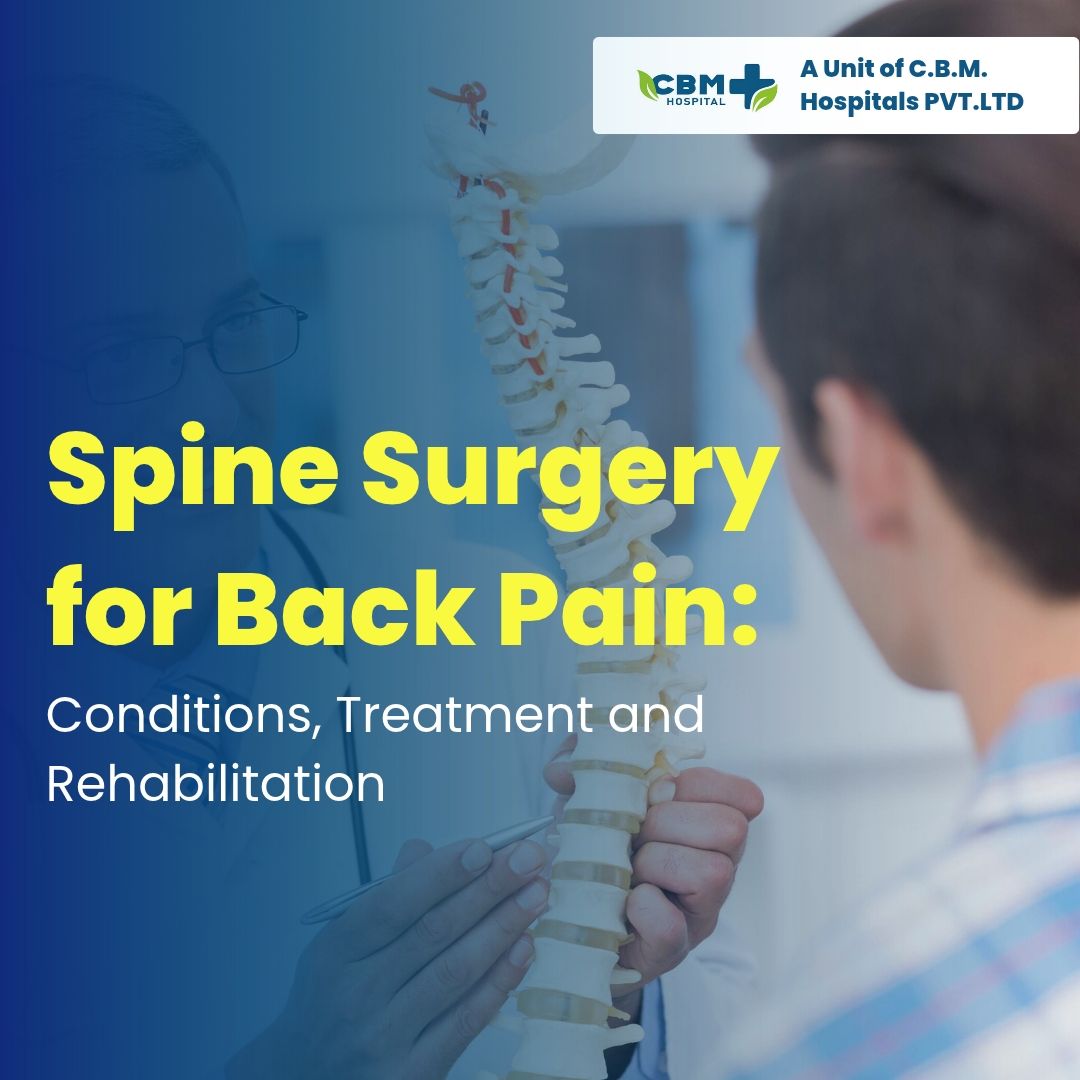
Spine Surgery for Back Pain: Conditions, Treatment and Rehabilitation-
Back pain is one of the most common health concerns and can affect people of different ages. It may develop because of poor posture, muscle strain, age-related changes, injuries, or problems involving the spine and its surrounding structures. While many cases improve with rest, physiotherapy, medication, and lifestyle changes, some conditions may require further medical evaluation and, in selected cases, spine surgery. Spine surgery aims to address specific structural problems that cause persistent pain, nerve compression, spinal instability, or difficulty with movement. Modern surgical techniques and rehabilitation programmes can help suitable patients improve mobility and return to daily activities. Understanding the causes of back pain, available treatments, surgical options, and recovery process can help patients make informed decisions about their spinal health. What Is Spine Surgery? Spine surgery refers to procedures performed to treat problems involving the bones of the spine, intervertebral discs, spinal nerves, or spinal cord. The type of surgery depends on the underlying condition, its severity, the patient’s symptoms, and the results of medical investigations. Not every person with back pain needs surgery. Most cases are initially managed with non-surgical treatments. Surgery may be considered when symptoms remain severe despite appropriate treatment, when nerve compression causes significant functional problems, or when there is spinal instability or another condition that requires surgical intervention. A qualified spine surgeon evaluates the patient’s medical history, physical examination, imaging results, and overall health before recommending a procedure. Common Conditions That May Require Spine Surgery Several spinal conditions can cause persistent back pain or symptoms affecting the legs, arms, or other parts of the body. 1. Herniated or Slipped Disc The spine contains soft discs between the vertebrae that act as shock absorbers. A disc may bulge or herniate when its inner material pushes through its outer layer. If the affected disc presses on a nearby nerve, symptoms may include back pain, pain radiating down the leg, tingling, numbness, or muscle weakness. Most disc problems do not require surgery. However, surgery may be considered when nerve-related symptoms remain disabling despite appropriate treatment or when significant neurological problems develop. 2. Spinal Stenosis Spinal stenosis occurs when the spaces within the spinal canal or nerve passageways become narrowed. This narrowing can place pressure on the spinal nerves. Common symptoms include back or neck pain, numbness, tingling, leg weakness, and difficulty walking for long distances. Some people experience symptoms that improve when sitting or bending forward. Treatment depends on the severity of symptoms and may include physiotherapy, medication, activity modification, or surgery to relieve nerve compression. 3. Degenerative Disc Disease As people age, spinal discs can lose water content and flexibility. These changes may contribute to stiffness and pain, although disc degeneration seen on an imaging scan does not always cause symptoms. Treatment usually begins with exercise-based rehabilitation, pain management, and lifestyle changes. Surgery is considered only for selected patients when symptoms are persistent and the findings support a specific surgical approach. 4. Spondylolisthesis Spondylolisthesis occurs when one vertebra slips forward relative to the vertebra below it. It can cause lower back pain, stiffness, and sometimes nerve compression. Mild cases may be managed without surgery. If there is significant instability, persistent symptoms, or nerve compression, a spine specialist may consider decompression or spinal fusion. 5. Spinal Fractures Spinal fractures may result from accidents, falls, sports injuries, or weakened bones caused by osteoporosis. Treatment depends on the fracture’s stability, location, severity, and whether the spinal cord or nerves are affected. Some fractures heal with bracing and activity modification, while unstable fractures or those associated with neurological injury may require surgery. 6. Scoliosis and Spinal Deformities Scoliosis is an abnormal sideways curvature of the spine. Some people have mild curves that require observation, while others develop progressive deformity, discomfort, or functional difficulties. Surgery may be considered for selected patients with significant or progressive deformities, depending on age, curve severity, symptoms, and overall health. 7. Spinal Tumours or Infections In some cases, tumours or infections affecting the spine can cause persistent pain, weakness, or other neurological symptoms. These conditions require prompt medical evaluation. Treatment may involve medication, biopsy, surgery, or other specialist care, depending on the diagnosis. Warning Signs of Serious Back Problems Back pain should not always be assumed to be a simple muscle strain. Certain symptoms require urgent assessment. Seek emergency medical care if back pain is accompanied by: New difficulty controlling the bladder or bowel. Difficulty passing urine or an inability to urinate. Numbness around the groin, inner thighs, or saddle area. New or rapidly worsening weakness in the legs. Severe back pain following a major accident or fall. These symptoms can indicate serious nerve compression or spinal injury. Arrange prompt medical evaluation for persistent or worsening pain, unexplained weight loss, fever, a history of cancer, or pain that is severe at night. These symptoms do not always indicate a serious condition, but they may require further investigation. Types of Spine Surgery Different procedures address different spinal problems. The appropriate operation depends on the diagnosis and the goals of treatment. 1. Discectomy A discectomy involves removing part or, in some cases, all of a damaged disc that is compressing a nerve. It is commonly considered for selected patients with a herniated disc and persistent nerve-related symptoms, particularly when pain radiates into an arm or leg. The goal is to relieve pressure on the affected nerve. Improvement in radiating pain may occur sooner than improvement in numbness or muscle weakness, and outcomes vary between patients. 2. Laminectomy A laminectomy involves removing part of the vertebra called the lamina to create more space for the spinal nerves. It may be performed to treat spinal stenosis or other conditions causing nerve compression. Depending on the patient’s spinal stability, additional procedures may or may not be necessary. 3. Spinal Fusion Spinal fusion joins two or more vertebrae so that they heal into a single stable section. Screws, rods, cages, bone grafts, or other devices may be used, depending on the procedure. Fusion may be considered for selected patients with … Read more