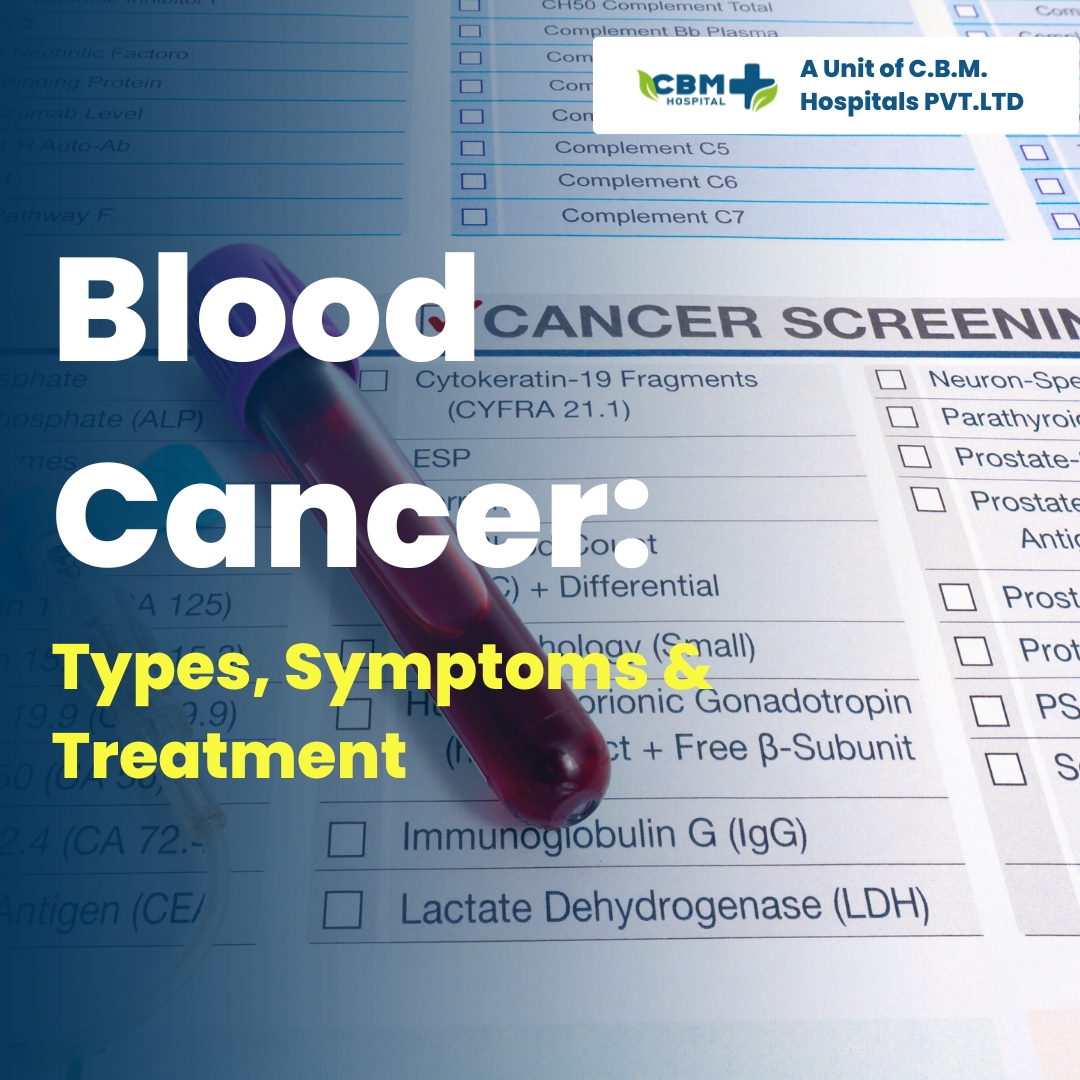
Blood cancer is a group of cancers that affect the blood cells, bone marrow, or lymphatic system. These cancers can interfere with the body’s ability to produce healthy blood cells, fight infections, and control bleeding.
Although a diagnosis of blood cancer can be frightening, advances in cancer diagnosis, chemotherapy, targeted therapy, immunotherapy, and stem cell transplantation have improved treatment options for many patients.
Understanding the different types, symptoms, risk factors, diagnosis, and treatment options can help patients seek medical attention at the right time.
What Is Blood Cancer?
Blood cancer occurs when abnormal blood-forming or immune cells grow uncontrollably and interfere with normal blood-cell production and function.
Unlike many solid tumors, some blood cancers primarily affect the bone marrow, blood, or lymphatic tissues rather than forming a single solid mass.
The three major types of blood cancer are:
- Leukemia
- Lymphoma
- Myeloma
Each type behaves differently and requires a specialized approach to diagnosis and treatment.
Types of Blood Cancer
1. Leukemia
Leukemia affects blood-forming tissues, particularly the bone marrow, causing abnormal white blood cells to multiply uncontrollably.
Major types include:
- Acute lymphoblastic leukemia (ALL)
- Acute myeloid leukemia (AML)
- Chronic lymphocytic leukemia (CLL)
- Chronic myeloid leukemia (CML)
Acute leukemias generally progress rapidly and require prompt treatment, while chronic forms may develop more gradually.
2. Lymphoma
Lymphoma begins in lymphocytes, a type of white blood cell involved in the immune system.
The two main categories are:
- Hodgkin lymphoma
- Non-Hodgkin lymphoma
Lymphoma commonly affects lymph nodes but can also involve other organs and tissues.
3. Multiple Myeloma
Multiple myeloma develops in plasma cells, which are immune cells responsible for producing antibodies.
Abnormal plasma cells can accumulate in the bone marrow and affect normal blood-cell production and bone health.
Common Symptoms of Blood Cancer
Symptoms vary depending on the type and stage of blood cancer. Common signs may include:
- Persistent fatigue or weakness
- Unexplained weight loss
- Recurrent infections
- Persistent fever or night sweats
- Easy bruising
- Frequent or unexplained bleeding
- Pale skin
- Swollen lymph nodes
- Bone or joint pain
- Shortness of breath
- Abdominal discomfort or fullness
These symptoms can occur with many non-cancerous conditions, so having one or more symptoms does not mean that a person has blood cancer.
What Causes Blood Cancer?
In many cases, there is no single identifiable cause. Blood cancer develops through genetic changes that cause abnormal cells to grow or survive when they normally would not.
Certain factors may increase risk, including:
- Increasing age for some blood cancers
- Previous chemotherapy or radiation exposure
- Certain inherited genetic conditions
- Exposure to particular chemicals
- Some viral infections
- A weakened immune system
- Family history of certain blood cancers
Having a risk factor does not mean that cancer will definitely develop.
How Is Blood Cancer Diagnosed?
Diagnosis usually begins with a medical history, physical examination, and blood tests.
Depending on the suspected cancer, investigations may include:
- Complete Blood Count (CBC)
- Peripheral blood smear
- Bone marrow aspiration or biopsy
- Lymph node biopsy
- Flow cytometry
- Cytogenetic and molecular testing
- CT, PET, or MRI scans
- Additional specialized tests
These tests help determine the specific type of blood cancer and guide treatment decisions.
Treatment for Blood Cancer
Treatment depends on the type of blood cancer, its stage or risk category, genetic characteristics, and the patient’s overall health.
Treatment may include:
Chemotherapy
Medicines are used to destroy cancer cells or stop them from multiplying.
Targeted Therapy
These medicines target specific molecules or pathways involved in cancer-cell growth.
Immunotherapy
Immunotherapy helps the immune system recognize and attack cancer cells. It is used for selected blood cancers.
Radiation Therapy
Radiation may be used in certain lymphomas and other situations to destroy cancer cells in specific areas.
Stem Cell Transplantation
A stem cell transplant may be recommended for selected patients, particularly with certain leukemias, lymphomas, or myeloma.
Supportive Care
Treatment may also include blood transfusions, antibiotics, medicines to control symptoms, and nutritional support when necessary.
Can Blood Cancer Be Cured?
Some blood cancers can be cured, while others can be controlled for many years with appropriate treatment.
The outlook depends on:
- Type of blood cancer
- Stage or disease risk
- Genetic and molecular characteristics
- Response to treatment
- Age and overall health
Early diagnosis and appropriate specialist care can significantly influence treatment outcomes.
When Should You See a Doctor?
Consult a healthcare professional if you have persistent or unexplained:
- Fatigue
- Fever
- Night sweats
- Weight loss
- Frequent infections
- Easy bruising or bleeding
- Swollen lymph nodes
- Bone pain
These symptoms do not necessarily indicate cancer, but persistent or unexplained symptoms should be investigated.
Blood Cancer Diagnosis and Treatment at Brij Lal Hospital
At Brij Lal Hospital, patients can receive comprehensive evaluation and treatment for blood-related disorders through experienced physicians, oncologists, pathologists, and other specialists. Diagnostic services such as blood testing, imaging, pathology, and specialized investigations help support accurate diagnosis and treatment planning.
For patients searching for the Best Multispeciality Hospital in Haldwani- Uttarakhand, access to experienced specialists and advanced diagnostic facilities is important when evaluating suspected blood cancer.
Patients looking for the best hospital in Haldwani Uttarakhand can seek multidisciplinary care, personalized treatment planning, and ongoing follow-up for cancer and other complex medical conditions.
Frequently Asked Questions
Is blood cancer the same as leukemia?
No. Leukemia is one type of blood cancer. Blood cancer is a broader term that also includes lymphoma and multiple myeloma.
What is the first sign of blood cancer?
There is no single first symptom. Fatigue, unexplained fever, recurrent infections, unusual bruising, swollen lymph nodes, and unexplained weight loss can occur, depending on the type.
Can a CBC detect blood cancer?
A CBC can identify abnormal blood-cell counts that may prompt further investigation, but a CBC alone usually cannot confirm blood cancer. Additional tests may be required.
Is blood cancer treatable?
Yes. Many blood cancers are treatable, and some can be cured. Treatment depends on the specific type and individual disease characteristics.
Is blood cancer hereditary?
Most blood cancers are not directly inherited. However, certain genetic conditions and family histories can increase the risk of some types.
Conclusion
Blood cancer includes several different diseases, primarily leukemia, lymphoma, and multiple myeloma. Their symptoms and treatment approaches can vary considerably.
Persistent fatigue, unexplained weight loss, recurrent infections, unusual bleeding, bruising, fever, or swollen lymph nodes should not be ignored. While these symptoms are often caused by conditions other than cancer, timely medical evaluation can help identify the underlying cause.
With advances in diagnosis and treatment, many blood cancers can now be effectively treated or managed. If you have concerning symptoms or an abnormal blood test, consult a qualified healthcare professional for appropriate evaluation and guidance.